From all around the town, and from the hills above it, the good folk tumbled out of their homes, and collected in the square. The bank was in town. Anxiously, the people formed a queue, the ritual most strongly associated with this social institution. Most had come to see the bank clerks employed in valuation: the Fortune Tellers as they were called. Behind their long trestle tables of mahogany, the Tellers would Tell, judging each object as it was presented to them, and passing comment on its interest to the bank.
It was on the basis of these proclamations that the people would decided whether to keep or destroy their belongings. Something that was useless to the bank was useless to society, because the bank was the storehouse for all social objects. You never really owned anything anymore, but simply exchanged it for credit. An object given to the bank on loan equated to the possibility to loan something else in return. A constant fluctuation in social needs for certain items, furniture, vehicles, jewelry, clothes, ensured a constant exchange. The bank worked like a cooperative society for objects, with 80 million members... The ease with which objects were deposited and retrieved from the bank very quickly loosened the ties people had with them. The inherent desire to hoard soon melted away.
People found that in time they did not miss any of these things they gave up, and never asked for them back. They remain to this day in the vaults of the bank, able to be viewed, like a still-living museum to our civilisation. The bank was a stepping stone to the objectless society.
This is a continuation of Millennium People's IcelandicSaga...
The first question to come out of every Icelander's mouth on hearing that we were a group of architects from London, and that we were interested in the end of the world, was "why on earth did you come to Iceland?" This apparent self-deprecation in fact masked a rather bizarre understanding of the current global condition: they didn't think Iceland was a very good place to look for the end of the world.
Economic ruin, melting glaciers, massive deforestation and dwindling supplies of fish (the only real product to come out of the country in any appreciable quantities) and yet the people of Iceland were irritatingly blasé about everything. The economic woes will pass, they felt, and if the glaciers melt, well, that's just how it is. Rising sea levels? Iceland sits at the junction of two continental plates, and is growing all the time.
'Do you realise', I said 'that the world is quickly running out of oil?' They smirked into their hardfiskur (fish dried to resemble balsa - mine gave me a paper cut). All they have to do is a dig a hole and practically unlimited amounts of power and hot water come out. The vast majority of this energy goes into refining aluminium, but, so scientists at the Agricultural University told us, if this energy was diverted to agriculture Iceland could easily grow several times as much produce as it needed.
At their campus, rows of glasshouses cascading down a hill in Hvanneyri, the glowing warmth of sodium lamps shines out into bitter cold and eternal crepuscule that is Icelandic winter. Inside the hot houses: room after room of perfectly shaped tomatoes, enormous cucumbers, coffee, bananas, kiwis. Also one room, apparently without purpose, filled with examples of cacti. One scientist speculated on perhaps growing wheat next winter. The idea of vast fields of grain grown under an Eden-project like roof in the freezing north of Iceland does my head in a bit.
Hardcore technology: Web 2.0 suicide - the fastest way to permanently delete yourself from all social network sites. The Consumer Electronics Show was on in Japan this year. So cool. Microsoft obvious fail. I mean, look at the guy's jumper. Related, Microsoft Word 2010 parody. Also Japan, the suicide forest at the base of Mt. Fuji; Pimp your maps with Cloudmade.
Meanwhile, a look around the world: its so cold here in the UK pensioners are burning their books. Very Bradbury. Related, the Ballardian forum is up and running again. Winter is cruel: muppet suicides; not related, global warming solved by paint; super-sweet anti-whaling speedboat rammed by the Japanese recently. Now sunk; Australia still accidentally racist. America: NY's proposed cable-car network; Boston's abandoned subways; California: nudists upset over rotting seals buried at their beach. Also California, Arnie says prisons must be at least as good as schools (or something). In America, plane thieves get their own Facebook fan pages. How not to write about Africa. More globally: weird shit's going on with the Milky Way's Dark Matter.
Cool shit: beauty is she (models/fashion/SFW) in particular I think there is a shoot to be made on the subject of WW1 women; Interesting letterheads (Einstein, Hitler, Johnny Cash, etc); DIY Kung-fu film script; CGUnit (which I embarrassingly misread), a sort of CGI/graphic art/photography mega-site; the new book from Jason; 60's sex and style from Pour 15 Minutes d'Amour (for 15 minutes of love). Ne le regardez pas au travaille (NSFW); Related to you: mum and dad.
There are somewhere in the order of 4.2 billion unique Internet addresses (IPs), housed on 44 million servers. These consume about 5% of all the world’s electricity and produce about 2% of all carbon dioxide emissions. This amounts to roughly 80 megatons a year and is similar in output to the emissions of Argentina or the Netherlands.
It is comprised of about 40 million gigabytes of information, which, in its simplest form, would weigh something in the order of fifty-six millionths of a gram.
Here the contradiction: the Internet might, theoretically, occupy less space than a single grain of sand, and yet its contribution to global warming is equal to a small country. It is both an immense geographical entity and a miniscule atomic whisper. It exists in a time and place, and yet transcends that to become timeless and aspatial.
It is an emergent system, where a highly-engineered, yet simple, set of rules has allowed for the creation of a massive network sprawling across the planet. The structure of the Internet is a hub and spoke system, in which information is hoarded at central servers and trickled down to individual IPs, making it, in technological terms, far from democratic.
Several times while photographing Iceland I was reminded of the haunting images taken by Icelandic-Dane Olafur Eliasson. He replaced Antony Gormley as my favourite living artist a couple of years ago – as I became less and less interested in people and more and more interested in landscapes.
An image doing the rounds on national newspaper covers. I'm right in the damn middle of it. Should have stayed in Sydney... Nonetheless, the city can be quite beautiful:
City people do not give a damn about their physical orientation. Urban dwellers do not know where they are. They could not tell you where north is, or at what angle the sun rises in winter. They will tell you that London is flat, because online maps have no topography. Almost no Londoners have seen the mouth of the Thames, nor even a photographic representation of it. Psychogeography is outmoded, depressingly retrospective.
The real has already become irrelevant.
The fear of city people, who make up more than half the world’s population, is not physical disorientation, but digital disorientation. Our eternal angst about social acceptance has been superposed into the digital realm. Belonging is about Facebook networks, Twitter followers, Blogger comments, and, to a lesser extent Myspace fans, ICQ & MSN Messenger contacts. Of course, the names of these programs will change, but the essence of online acceptance will remain. It may even get more extreme, as perhaps indicated by the rising popularity of Massively Multiplayer Online Role Playing Games (MMORPG). Further, our fear is not only that the online community will accept us – in whatever guise we choose to present ourselves – but also that we will be able to connect to them. Chat abbreviations like ‘do’ (dropped out) are becoming more and more rare. The era of the permanent threat of imminent disconnection is over. The fear of temporary disconnection had been replaced by a much greater fear of permanent disconnection...
The landscape of southern Iceland is a vast treeless environment; a desert of lava flow, salt flats, and luxuriant mosses. It is so perfectly horizontal you would swear you could see the curvature of the planet. At certain points steam rises directly from the earth, whipped up by the wind into sulphurous slipstreams, backlit by the five hour sunrise that is hibernal day. The ground is warm to the touch at these places, and is marked by the brown stain of burned vegetation. Sometimes there is a puncture, a pool of bubbling water, sometimes just darkened soil.
This is the primary power source of the Icelanders, geothermal energy. At Hengill, in the south, bores have been sunk to a depth of 3000m, where the water is several hundred degrees in temperature. Through a complicated system of heat exchanges and turbines the plant produces an enormous amount of hot water and electricity, primarily to fuel the ever-hungry aluminium industry. Although Iceland has none of this metal itself, cargo ships will bring ore from as far away as Australia in order to benefit from the cheap electricity.
The over-abundance of power and hot water manifests itself in unusual ways. Graveyards are often lit up 24 hours a day. As you drive through the countryside, rolling through the twilight fog, suddenly a cluster of neon crosses will flash by… Also, everything is heated, the side-walks, the soccer fields. There can be two foot of snow all around a perfectly dry concrete walkway.
“We have so much energy,” a geothermal operator at Sudeyreri’s miniature power plant told me, “that at night we have to disconnect the generators. I’ve been thinking of solutions, and I think that if we could charge electric cars or boats at night we would not be letting so much go down the hill.” He gestured to the steaming rivulet cascading away from the plant. Its hard to imagine, but if cities like London want to continue into the twenty-first century, they will have to put themselves in the same position…
Friday, 1 January 2010
As a blog purportedly dedicated to the spirit of the times, what could be more fitting than to remember twenty great moments from the last ten years?
2000 Al-Qaeda Summit: held in Kuala Lumpur, it was basically a knees-up for terrorists. The 9/11 plot was hatched over cigars in a lady-boy strip club. True story.
Y2K: The Millennium Bug. Biggest disappointment ever.
Concorde: Air France flight 4590 burst into flame and trailed into a hotel, 113 dead. Concorde was subsequently canned, the first time in history aviation technology has taken a backward step. Supersonic air travel is now a retro thing of the past, which is perhaps the strongest argument that this is not the future after all.
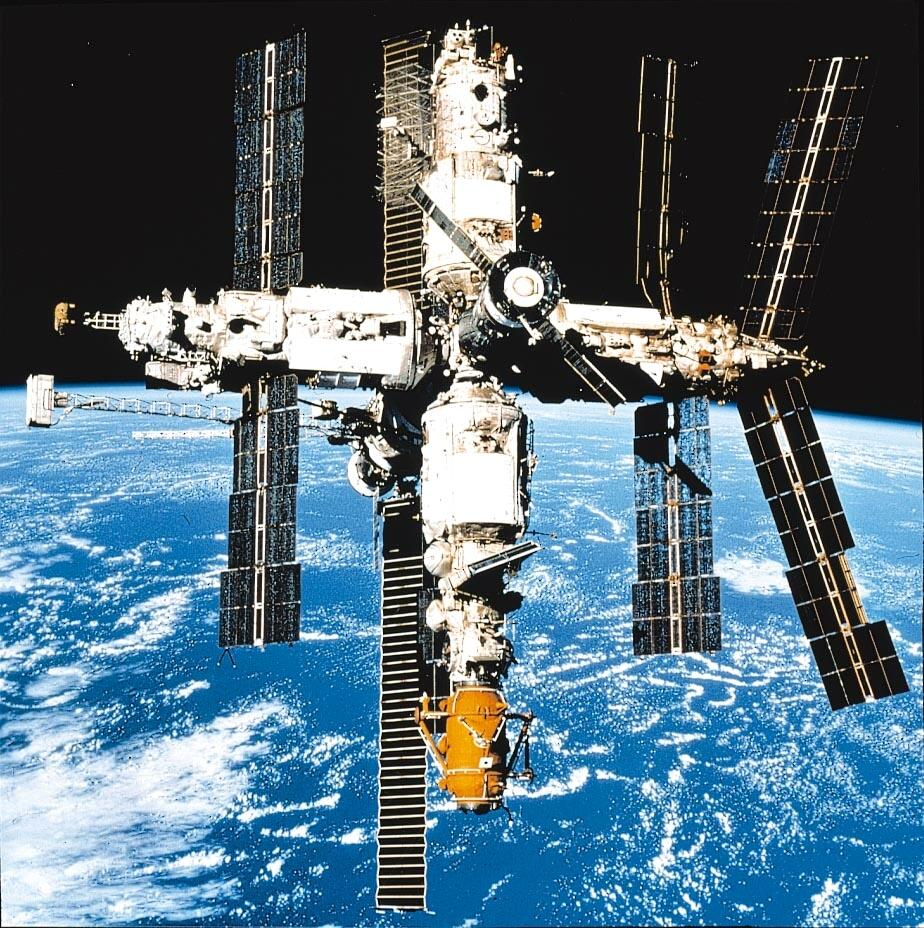
The End of Mir: irreparably punctured by an unknown source, the depressurised space station was pushed into a lower orbit and burnt up: the fiery death of cold war competitive spaceflight.
9/11: Where were you?
The Euro: The thing I will never understand about the introduction of the Euro is why the notes weren’t made of plastic, like the Australian currency. Their wonga is foolproof for forgers, and waterproof for days at the beach. Given the amount of rain and humidity in Europe it would have made so much sense.
Britney + Madonna kiss: the beginning of the end for popular music, one went on to date a boy called Jesus and the other to shave her head and make a habit of walking into public toilets without shoes on…
Columbia: Foam from the boosters dislodged some heat tiles, and rather than send up another space shuttle to help fix the damage, cheapskates NASA decided to risk re-entry. It would have been pretty cool to see two Space Shuttles in orbit at the same time, instead Columbia and her crew of seven were spread over several miles of central Texas.
SARS: you remember that? Before Swine Flu was popular, Avian Flu was supposed to kill us all.
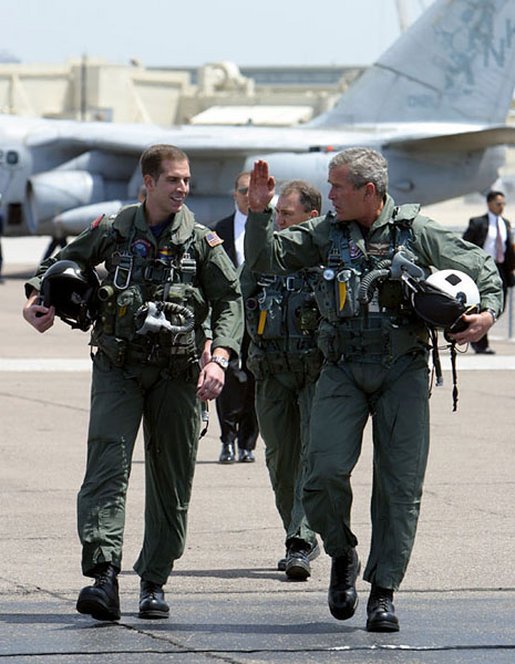
Mission Accomplished: The greatest pre-emptive strike of the decade has to go to Bush, as he strutted in a fighter-jet jumpsuit onboard the USS Abraham Lincoln declaring that the major combat in Iraq was over. This inspired the song Dirty Harry, by the Gorillaz, which as far as I’m aware was the first real anti-war song of my generation –
“Out in the desert, with a street sweeper, The war is over, so said the speaker, With the flight suit on, maybe to him I'm just a pawn, So he can advance, remember when I used to dance, Man, all I want to do is dance”
Spaceship One: Commercial spaceflight. What could possibly be cooler than that? Of course Branson bought the company…
Smoking Ban: Now clubs and pubs only smell like fart and sweat.
Abu Ghraib: I have nothing to say.
Boxing Day Tsunami: Crazy. Shit.
Liquids and Gels: A very irritating addition to the list of aeroplane “do not’s”.
Iphone: Perhaps the strongest evidence yet that we are living in the future.
LHC @ CERN: Rumours were spreading thick and fast about whether or not the Large Hadron Collider was going to destroy the world by creating a black hole along the Franco-Swiss border. When the machine kept breaking down this led to a group of scientists claiming that people from the future were coming back in time to sabotage the machine, to prevent us from seeing into the origins of the universe. Now being made into a major motion picture.
Obama: What a handsome, tanned man. But while I loved him during the election for not descending to Palin-McCain’s level (name-calling) and taking the moral high hand, now he is president I just want him to stand up for himself.
MJ dies: ‘show us on the doll where the bad man touched you, Jimmy.’ That black/white man/boy was dead to me a decade ago…
December 16, 2009: Astronomers discover GJ1214b, the first-known exoplanet on which water could exist. If advances like this continue it is only a matter of time before we make Star Trek a reality. Cool.
A Joyous New Year to all of you still using the Gregorian system. If, like me, you roll with the World Calendar, Happy World's Day, and don't forget to stop your clocks for the next 24-hours!
If you like what you read, join us on Twitter here.
ABOUT
Originally nothing more than a blog, MP is approaching a climax - to transform from the rambling reflections of Jack Self (AA, AR) into a think tank and collective.
Please get in touch and keep it real: info@millenniumpeople.co.uk
What (if any) is the role of architecture as an agent of social change? Are we more effective reformers (or revolutionaries) as citizens, or as architects?
Where are the limits of architecture? What is (or should be) the relationship between the citizen and the state, the individual and the metropolis, building and landscape?