Showing posts with label London. Show all posts

Thursday, 27 May 2010

fistful of links


I'm in the labs waiting for some images to render (more on that later in the year), so while the computer plugs away at it: some news.

London: the image above maps the city by geo-tagged flickr photos – I'm kind of surprised the rapidly gentrifying East isn't darker. Check out the Geotaggers' World Atlas (must see!). Related, the Londonist has mapped city institutions that broadcast on Twitter. Slight diversion - did you know twitter.co.uk is an English nationalist site? Tweets precipitated into cuckoo clocks (also, tweets converted into bone structure). Back to geotagged photo maps: Europe. Back to London: Boris Johnson, mayor thereof, is scrapping the Western Congestion zone. WTF dude? Chelsea is where most of the cars are at, no? Also on Boris' to-do list, city-wide free wifi by 2012 - from the unimaginatively named company The Cloud.

Herzog + De Meuron have turned a car park into an art form (1111 Lincoln Road, Miami). But is it really Post-Ballardian? Related, Into The Loop's mixed-use car park/metro station. Still re-using urban structures – the Lords of Raisintown: skateboarders that clean out the pools of re-possessed homes in order to skate in them. Police and real-estate agents are cool with this, since it keeps the pools clean and the property supervised. BLDG BLOG on rogue factories.

I wrote yesterday about Renzo - MP tip-off (I wish you would all send in more, frankly) from an Italian reader – for $11 you can 'be Renzo Piano', its an ipad app... OMA have made a new map of Europe – Eneropa! It's been wrapped up by all the regular dudes, Supercolossal + Infranet and whatever, but the best images are by far Club Construct.


Image source and location unknown...

Dross: inside Hitler's bunker (LIFE have some great galleries); The Ghastlycrumb Tinies, a children's book; startup quotes (Twitter founder: "Investors are employees you can never hire. We made sure to pick investors that thought like us."); crazy tunnels in Russia's only private metro; Turkish bees make beautiful nests from flowers; Notes from Chris (must-read!); in relation to my screen bit, the Nintendo DS as building; why I don't go to festivals; Sean Connery in a thong; steal this idea; Japanese neon light fights (real gorey, with blood and shit, prob NSFW); minigolf meets publicity: advertput; a mad hail storm in the states...

Finally,


Wednesday, 26 May 2010

piano lessons

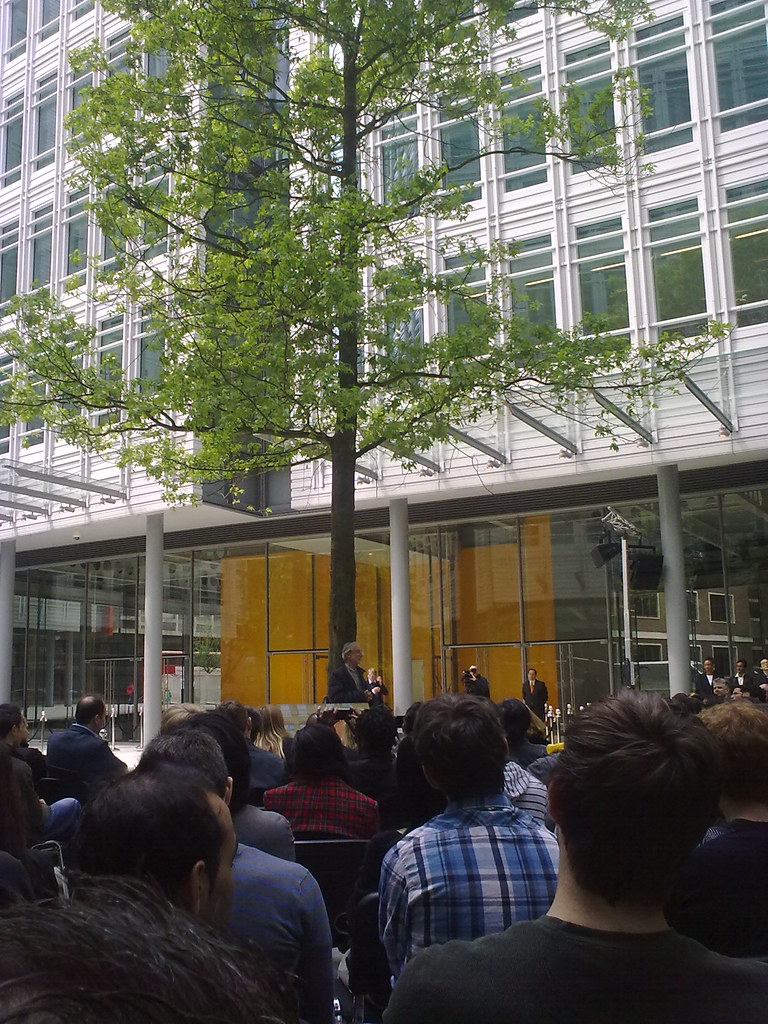
"Architecture is a dangerous profession. If we are wrong, we are wrong for a long, long time." So saying Renzo Piano began his short speech to a small audience gathered in the central courtyard of his first UK building (and the most colourful, by percentage of facade, ever built in London): Central St. Giles.

Personally, while I find his eye for detailing impeccable, I am not a fan of his work in general. Although he expresses himself with a frank charm, I find his approach to architecture strangely... archaic. His description of how the building came to be – starting with the destruction of an old Ministry of Defence brick fortress, followed by nine years of searching for the right way to create 'an urban meeting place' – was part architect-as-master-builder, part architect-as-social-engineer.

"London has a texture that is medieval, no two facades point in the same direction." he argued, describing the condition of the city. "It has a magic feeling. It is made of piazzas and streets and passages... it is always mixed in its use." I definitely agree London is medieval, but I've never stumbled into one of its piazzas. It is a grubby and run-down city, a city that takes time to learn to love, with none of the allure (or homogeneity) of Rome or Paris. The only people I've ever heard use the word "magic" in London are Spanish tourists describing the hit musical 'Mama-Mia: the songs of Abba'.

"I think the city is a place of surprise." Piano continued. There was something terribly trite about this Italian, who "wanted to tell the truth, and be completely honest" about the building. The corporate sterility of the courtyard and the transplanted oak jarred with this old-world charisma and sincerity about materiality. "Every building must bear the mark of the hand"... It didn't help the talk was called 'Piano Lessons'. Jeez. Talk about Cheese Louise.

"Architecture is the art of making shelter. But it also the art of answering desires and dreams." Cue whoosing wind and wind chimes. Then he suddenly changed pitch, and the smile fell from his face. "I want to confess everything. Some people think you begin with the idea. But there is always something missing from a project. I don't mean I am a perfectionist, I am talking about the real struggle. We want to be good, but this takes a lot of energy. We [architects] must be stubborn. But we must also be right, so we must be good listeners... I don't think schools really teach you that. Maybe the parents, but mostly we learn this in life. You must fight –" he gestured to the developers sitting in the front row "but we're not really fighting, we are struggling" The project team smiled knowingly at each other. "This is what I call the responsibility of the architect... No one can be so arrogant as to know exactly what to do in this job, you must struggle." He broke off to look at a large printed render mounted on card "This is the problem with scale and proportion. Many people know how to make these horrible renders, that always lie! They can make perfect models, but if they are not careful they will end up with buildings that are just large models."

He closed with a metaphor: "Being an architect is like conquering the wild west. First you must get a caravan, and then there is a big river, and then the horse gets tired, and then you are attacked by Indians... And then you make it there in the end. And you think, sometimes those Indians look bad, but they're really good guys." The audience sat bemuzed, thoroughly puzzled by this last remark.

Saturday, 1 May 2010

one new change


As I mentioned some time ago, I arrived in London in February 2009 expecting to work on Jean Nouvel's One New Change project. For reasons that are still too emotional to go into in any depth, I was not employed. It grieves me further that in spite of the absence of my creative input the building is nonetheless approaching completion. My only consolation is that the glass is pretty ugly (more here on Flickr).

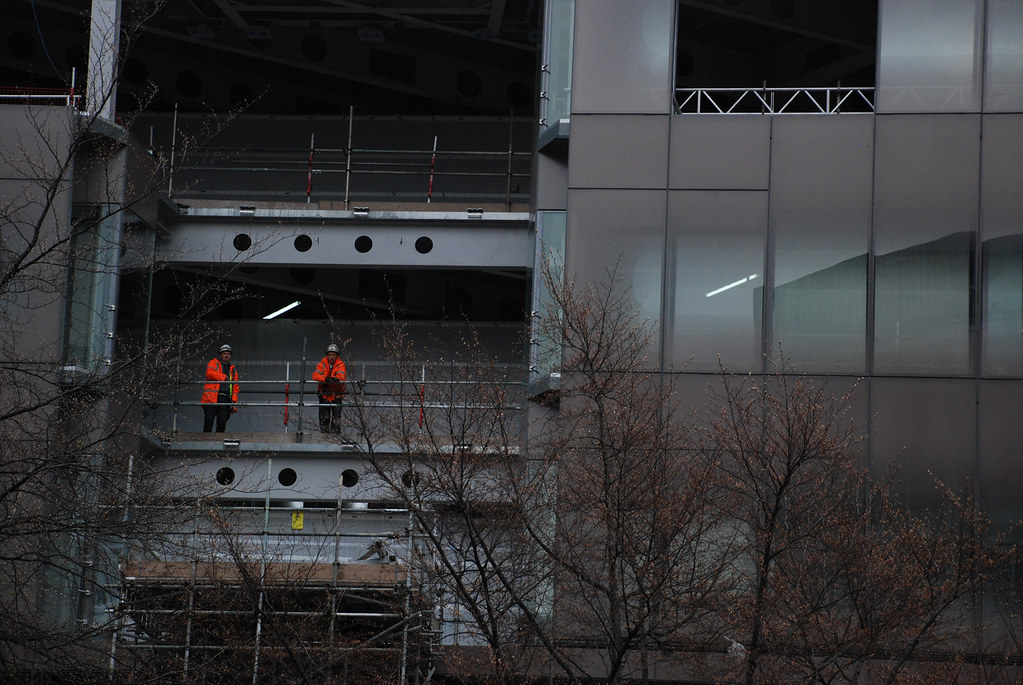
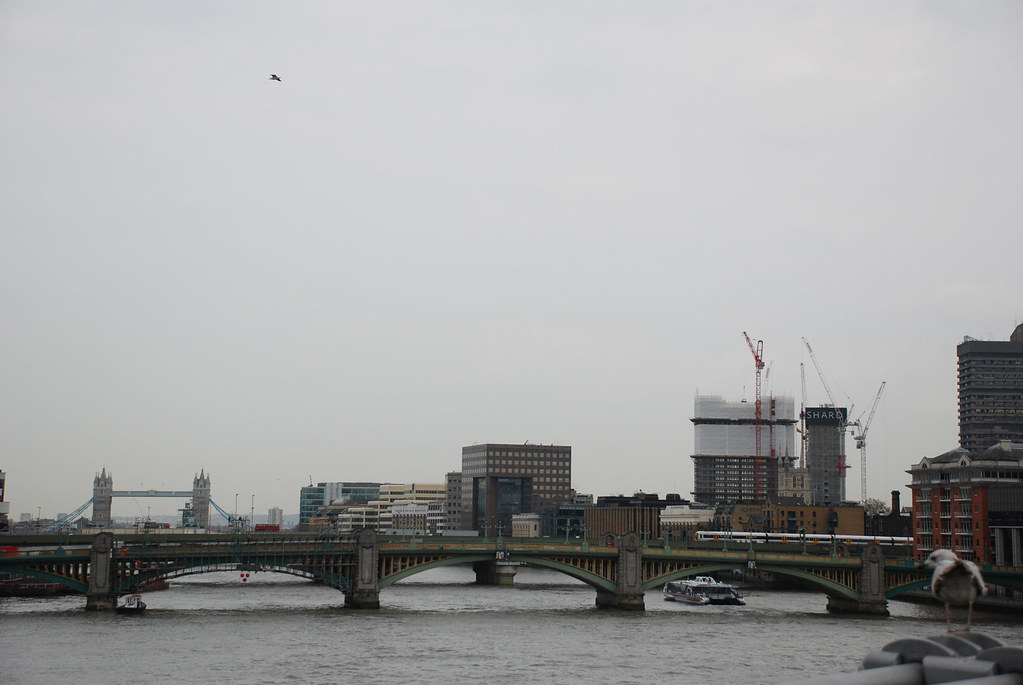
The building caused quite a lot of controversy when the valiant Prince of Darkness decided he didn't like it and was going to have it canned. This was shortly after his fiddling with the Rogers re-development over at Chelsea Barracks. Those same Qatari developers have their fingers in every pie and they are also responsible for the Renzo Piano monstrosity currently under construction near London Bridge. The core alone is the width of a 20 storey building.

Dark times lie on the horizon for London (literally, as the massive structure will be able to cast a shadow over all of Borough Market).


Shard (right) under construction.

Thursday, 29 April 2010

hermitage mooring


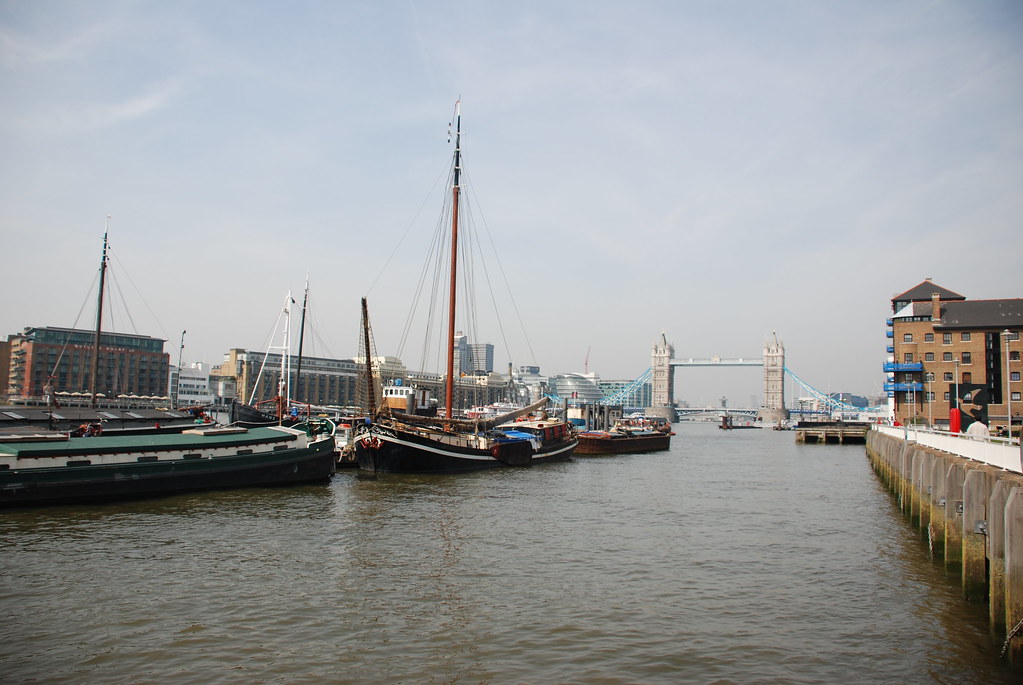
The Hermitage Mooring development is a beautifully executed architectural project. But it is also a proposition for the re-evaluation of the metropolitan citizen’s relationship to landscape. Perhaps most of all, it is a bold political statement – the result of a very personal struggle by its founders to demonstrate the possibility of individual will against established authority.

Sunday, 25 April 2010

comestible catastrophes


Images via Yofavo

After getting a tan yesterday I awake to find the world capped under tupperware. And the rain comes down. London in spring I suppose: some Sunday ruminations...

A few months ago Geoff Manaugh (BLDG BLOG) tweeted about a 1919 disaster, the "Boston Molassacre". A large molasses storage tank burst, and a wave of treacle roared through the streets (apparently at over 50km/h) killing 21 and injuring 150. Wiki notes: "The event has entered local folklore, and residents claim that on hot summer days, the area still smells of molasses."

This put me on to the London Beer Flood of 1814. The whole strange tale begins with a party organised by Meux's Brewery (owned by the first Baronet Sir Meux, whose name is inexplicably pronounced 'myooks'), located on the junction between Oxford Street and Tottenham Court Road. The occasion was a grand dinner to celebrate the construction of a giant vat capable of holding 600,000 litres of the popular beer stout porter (now known simply as stout). It was allegedly two storeys high and had a diameter of 20 yards. 200 hundred people dined within it.

Subsequently it was filled to capacity and the full pressure of the porter put upon its 29 iron hoops. Shortly after a workman noticed a small crack in one of the hoops, but seeing as they each weighed more than 200kg, he thought nothing of it. At around 6pm the same day the vat burst, creating an explosion reportedly heard five miles away. The immense pressure from the first vat toppled the second, the weight of which fell through to the floor below. A chain reaction ensued, 1.4 million litres of beer tore through the building's facade.

At that time Tottenham Court Road was the boundary of the St. Giles Rookery, and the building was surrounded by low housing of a poor construction. Several of the buildings could not stand the force of the wall of porter and collapsed. Eight people are recorded to have died, drowning in basements, crushed by debris or subsequent alcohol poisoning.

Rescue efforts were greatly slowed by the drunken masses scooping the beer directly from the cobbles. An apocryphal story has it that as beer-soaked victims were rushed to hospital the smell of beer led patients on other wards to believe beer was being served for all patients except them. Not accepting this apparent injustice they started a riot, which increased the number of wounded.

After an investigation the courts ruled that the event had been an act of God, and that no one was responsible. The beer company continued on that site until the 20's when it was demolished and the Dominion Theatre constructed in its place. I would frankly quite like to see a tsunami of beer crush the home of the Queen Musical.

Thursday, 22 April 2010

cheer up (and get on with it), it’s archigram!


Peter Cook, taken by Matt Jones (of Berg London) at that recent Westminster Archigram shindig.

While I was drinking downstairs Matt got right at the action (definitely check out what he has to say about the legacy of archigram).

Friday, 26 February 2010

redefining the landscape

Chris 'Blane' Rowat from Parkour Generations.

Guest post by Shaelena Morley

Somewhere there is a toe tapping to music on the tube, a ballerina is practicing her port de bras, a child is testing gravity in an effort to jump the highest off the swing set. There is grace and fluidity to the simplest of movements. And in these movements a fascination takes root when we take that first step as infants and begin to understand our body in relation to the space around us.
With adjectives such as bustling and fast-paced, the city, like the body, can be described through movement. Listen closely and you can almost hear her thrum as her individual components move about in the daily grind. Ironically, with traffic and people and queuing, the individual components (that’d be us city-folk) are rarely moving freely so much as constantly bumping into one another in a sometimes maddening staccato rhythm. We’ve all this energy and nowhere to go, and somewhere along the way we lose that spatial connection with the city.

And yet the “we” I refer to doesn’t apply to all city dwellers. A community dedicated to movement has been developing slowly over the years and more recently is coming to the forefront and establishing itself as its own culture. What began as le methode naturelle in France at the turn of the 20th century, a kind of physical training emphasising both body and mind, has evolved into l’art du déplacement more commonly known as parkour. Where the spatial connection of the city is lost, in parkour it is found by providing a new vantage point for engaging with the urban environment. For a parkour practioner, known as traceurs, the name of the game is efficiency of movement and continual engagement with the present and its surroundings. In moving from point A to point B in the city, the traceurs knows no obstacle, only the straight line in plan, the undulating line in section. Leap over the wall, onto the next, under the rail and over the path only to land with cat-like precision on the rail’s edge and drop almost silently to the ground far below. L’art du déplacement is executed with astounding agility (and certainly with more grace than I can muster).

I recently had the privilege of witnessing the discipline in action when I attended a “jam” in Southwark hosted by Parkour Generations for research. What became immediately apparent to me was the fact that this is very much a community. The morning began as an outdoor training session teaching very particular skills, but as the day wore on little by little people trickled into the abandoned estate from all directions for what would turn into an afternoon jam. With varied skill levels and virtually every demographic you can imagine, parkour veterans and newcomers alike practiced their skills, learning from and teaching to each other despite frigid temperatures and calloused hands.


Physical intensity is inherent in parkour and the nimble movement receives well-deserved attention. More than once I’ve heard parkour referred to as, “the jumping guys.” But with physical tribulation there lies mental trial, brain the foil of brawn. It is the mental discipline – the preparation, the focus, and the incredible awareness of the body and its surroundings, which is most impressive and likely the bigger challenge. It is with complete awareness that the mind can redefine its surroundings and the body can run free. And what does London look like through this new set of eyes? Why, like a psychogeographic playground, my good Millennium People. Suddenly the scale of the city revolves around the scale of the body - the grip of the hand, the breadth of the foot; distances are measured in human strides. And in continual oscillation from earth to building to wall to earth again, London is flat no more. She is a new landscape.

Here’s to new freedoms.

Thursday, 25 February 2010

shooting the messenger


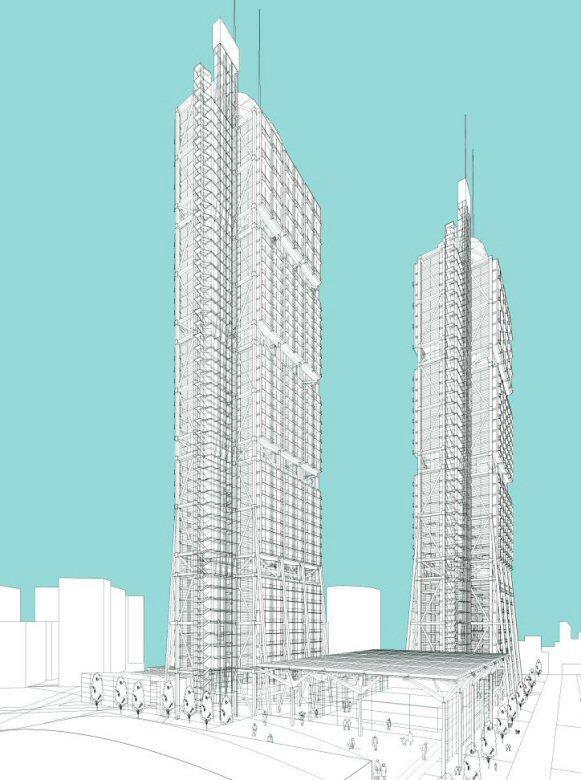
Lea Towers proposal, Stratford: Richard Rogers. Via SkyscraperCity

This short post owes much to a class discussion had this morning with Mark Cousins...

There is a temptation, when gazing up at the monstrosities of contemporary "post-architecture" (in the words of Sinclair), to let blame fall at the feet of the architect. Starting in earnest from perhaps the post-war period onwards, architects have been branded as cack-handed dreamers – belonging to a hopeless profession that is neither pragmatic nor artistic yet claims to be both. Their overpriced megalomanic schemes, fundamentally flawed at even the level of basic services and waterproofing, inflict upon every generation new social problems at ever-increasing scales. And yet it is rarely remarked that it is not architects that choose their site, their scale or their budgets.

Architects, and what is called architecture, is largely defined by the fulcrum of urban-planning and capitalist development. Neither of these forces is any less naive than the architect. Architecture's rise as a saleable commodity can be attributed, at least in part, to the transformation of the patron into the client. The patron, unlike the client, has no fiscal objectives in commissioning a project. In saying this I am perhaps extending my thoughts on Specular Architecture, which is both specular in a visual and iconic sense as well as being founded on financial speculation. Read: Zaha.

The scale of architecture responds to the scale of capital. And since a modern market economy demands constant growth, the scale can only increase. Larger and larger sites, larger and larger sums, larger and larger profits. I'm no apologist, but I think it is quite clear that architects, like any service profession, will rise to the expectations of whoever is footing the bill and giving the orders.

Tuesday, 23 February 2010

iain sinclair on nostalgia & forgetting


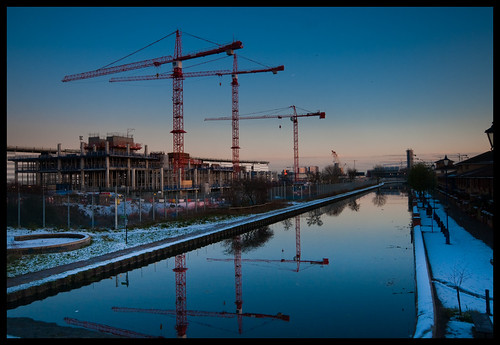
Olympic Park Cranes – Hackney, by Sam Cadby.

“Architect’s are very interesting because they’re on the brink of obsolescence…”

So saying, Iain Sinclair – psychogeographer, author, and self-nominated figure for the perpetuation of East London’s history – grouped architects with similarly defunct notions like ‘the spirit of place’, industry, integrity, common sense, community, etc, etc, etc. In short, everything that was once good and noble and is now rotten to its core. Boo, hiss, down with the modern world.

While I think the man is right about architects (I will elaborate presently), I am suspicious of anyone who would dissimulate a wild nostalgia (in which he seems veritably marinated) as a “fear of forgetting”. Certainly there is a fine line between wishing to engage meaningfully with the past and simply invoking history as a means to bombast an audience about the piteous state of the present. For me, this really distinguishes him from the other great psychogeographical author of our time, Will Self. Unlike Sinclair, Self is no moral pedagogue…

Sinclair’s subject was East London, its history, its architecture – a rose-tinted people fighting the good fight against the idiot developers and villainous politicians. In black and white terms he outlined the clear superiority of the city “as a human entity, as an organic entity” over the “post-architecture” imposed on the East by the coming Olympic-scale fuck-up. While I found his tone vaguely self-righteous, I nonetheless found his content interesting and his arguments extremely convincing (in several cases indisputable).

Readers from outside of London may not be aware of the Olympic situation, in a nutshell: the site is a vast tract of ex heavy-industrial land falling between Stratford and Hackney Wick (think fairly far east), towards the lower end of the Lea Valley (a rambling and beautiful wildlife park composed of marshes and canals). As Sinclair noted, it has always been thought of as an ‘edge’ of London – and it is psychologically disturbing to now realise that Stratford’s development will turn the nature reserve into an island, besieged by an ocean of urban nightmare.

The site beforehand, subject of the pamphlet referred to in this post on Cedric Price, was littered with industrial ruins, leftovers from a time when London still manufactured on any appreciable scale. What I did not know is that over 12,000t of radioactive material has been retrieved and re-buried at the site (evidence of a business that made glow-in-the-dark watch dials during the 60’s).

Like all Olympic games there has been scandal: £40million of “missing” funds, cost (and corner) cutting measures abound– the UK is in full recession mode after all. And yet the ridiculous promise of the developers is that they are attempting to give back a park to the public realm. This debased simulation of the wild beauty that existed before is indicative of modern ‘regeneration’ methods (e.g. an artistic drinking-hole is demolished to make way for an art-themed hotel, as at Old Street).
It would be hard to overstate either the incompetence of the architects or the stupidity of the clients involved in this venture. I’m not even going to touch that sensitive subject in this post, but simply let history validate my words. Sinclair could not find words to describe the process by which the client approaches an architect in the same way they would a hairdresser or a plastic surgeon, saying, “yeah, I like it, but I want a bit more of a curve over here – hey presto!”

Two final points, I had intended to write a short post, but the subject really fires me up:

was recently told that a town hall in Stratford was demolished in order to make way for a Tesco’s supermarket. I am now shocked to discover from Sinclair that there is a plan to extend the site to include apartments – residential zoning as an appendage to commerce: the possibility of perpetually living inside a mall. What then, mused Sinclair, is to stop all of Hackney from becoming an inner suburb of a supermarket?

the architect, that figure in decline, no longer has any control over the built environment, then what is his domain? This observation is not at all unique to Sinclair, and it is obvious that the profession is approaching a critical turning point. I would argue what we have to salvage is an architectural mode of thinking, a way of looking laterally at problems (the solutions to which often do not include buildings). The role of this coming generation of architects is to convincingly establish their dominance as the only and supreme profession of holistic thinkers… or else face professional extinction.

Friday, 8 January 2010

snow


An image doing the rounds on national newspaper covers. I'm right in the damn middle of it. Should have stayed in Sydney... Nonetheless, the city can be quite beautiful:

Monday, 16 November 2009

ghost forest


Walking through Trafalgar Square last night I took a photo of a crews installing a new artwork, called Ghost Forest. I'll let the website fill in the rest. Oh, and new pictures via the Londonist.

Monday, 9 November 2009

toyo ito talks it over


When I got home to Battersea the fog had completely permeated the suburb, leaving nothing but the orange halos of streetlights and massive neon 'Tescos' sign to guide my navigation. I shudder to think what it was like when this was all still swampland. That's right, I shudder.
+++
I spent the evening at the Architectural Association, listening to a talk by Toyo Ito entitled 'my first and most recent works'. This was a confusing title, because his first works seemed to encompass 1964 to 2002, and his recent works 2006 to 2009. I can't remember what he did in 2003,4 & 5, but he must regret it. He arrived, and bowed to everyone, and then just launched into an explanation of his beginnings in Japanese, with translator: the end of the 60's/early 70's, when rapid technological advances clashed with student political ideologies. He worked on Tange's Olympic Stadium, and Kikutake's Expo 70 Tower. Ito took inspiration from the Metabolists, particularly the Nakagin Capsule Tower, but also from less influential architects like Shinohara. He described Japan as being divided between Metabolism and another school that focused on minimalism, interiority and isolated space. This, he said, led to the current Japanese architectural trend of closed boxes [What We Do Is Secret] .

In 1971 he wanted to go back to university, but because of the revolts all universities were closed. So he was forced to open his own practise. His explained his first work, the Aluminium House, [unusually I can't find any good images of this building] as being founded around two Nagakin capsules that had fallen to the earth. This grounding, for him, signified the end of Metabolism, but also a new beginning. He purposely chose aluminium for its disposable connotations, as opposed to the solid durability of the Metabolist modules.

After his famous White-U building, where he had tried to create a completely isolated and socially disconnected space, he tried to re-engage with society and community through a Dom-ino mass produced housing system. They only sold one, which went to Sejima's parents. Towards the mid-eighties he tried to revisit some questions of traditional ephemerality in modern Japanese architecture. The Japanese house, he said, is like an empty stage [Kuma]. It only remains to bring in the furniture, which will immediately imply certain relationships – relationships brought to life through rituals.

He touched briefly on the 90's, ending with the Serpentine and Brugge pavilions, before brushing over completely the Sendai Mediatheque and concentrating on his Tama Art University Library. "I try to avoid becoming reliant on high quality finishes, because if you become too used to Japanese quality, you find it very hard to build elsewhere." In this building, through the furniture and the shelving, he tried to explore what the positions of the body associated with learning might be. What is the physicality of education?

Several questions were asked after the lecture: first Jencks rambled for a bit, really boring everyone with a long winded discourse, and finally with no question. If he hadn't been Charles Jencks I'd have reminded him whose lecture it was. Brett Steele asked a good one: Ito mentioned that he wanted to reject traditional symbolism in architecture, but, since his Dom-ino system he had in fact been rejecting some of the most fundamental elements of architecture: the column and the grid. None of his buildings after the Dom-ino possessed columns at all, nor a regular grid. Was this purposeful? Ito smiled and said, in broken English, "this is a subject of current research."

I asked "You mentioned several times the fact that this lecture is mostly translated, how would you say the language, or vocabulary, of Japanese space influenced your work?" He paused. At length, he said "Language is about an ambiguity, and there can often be a contradiction of expectations in translation. I find this metaphor useful: you go to the water temple, the surface is of still water. You pick up stones of different sizes, and you throw them. Each one creates different ripples. The meaning of the shape comes not from any single pattern of ripples, but through the collection and association of the sum. This is the Japanese language."

One other student asked "how do you conceive of ephemerality in your buildings?" Ito responded "The notion of ephemerality may not lie in the structure itself, but in its occupation, as at Sendai..." He spoke in English "But, generally, I should wish any architecture to not rest too long."

Certified Millennium Person.

Sunday, 8 November 2009

shetlands and urchins


Battersea Mill - unique for having no windmill, but wooden shutters that opened to turn a central shaft.

Winter is coming, the air has a certain bite to it. That grey light of dawn persists the whole day, and then brightens to dusk, before dimming to night. I emerged from my house at 5:30, to find myself in utter darkness.

If you catch the 344 past Battersea Power Station there is a type of bridge that goes over the railway, and down on the right is a small back street with an old Irish pub, called Finnegan's, on the corner. As I passed it this afternoon I noticed a small band of children peering over the handrail – kids from the estates, shivering without coats. They had a slight sheen under the lamplight... vaguely oily. Not a clean shine like machines, but like old newspapers wrapped around greasy chips. It really struck me.
In any case, the street had been partially blocked by two or three horse floats, and about three dozen Shetland ponies were tied to any iron or wood fixture their owners could find. The owners, pints in hand, were feeding the horses from buckets while the children nervously jeered from above. I looked more closely at the pub. Was that gas burning in its lanterns? The street was lit by gas?

One more piece of evidence that London is at best a Victorian city.

Tuesday, 27 October 2009

fistful of links


Relics of the Cold War, photography by Martin Roemers.

A nice cup of tea and a sit down: some news.

What do you want in life? No joke, no link, its a legitimate question. Post Secret style. Related, what bloggers want (bunch of wanke... oh). Segway to London town. "shock as figures show Britain is still in recession" from the Times (via And Another Thing) – who the hell is in shock about that? More importantly, the freesheet newspaper wars could soon be over, as the London Lite hints at kicking it in. Derelict London, & London Skylines. In the same vein, a page doing the rounds at the moment: 33-part guide to abandoned places.

A Bill Bailey classic, just to put this blog in some context. Related, the profound depths of our universe. Meanwhile, Royal de Luxe are doing their thing (Giants, surprise, surprise) in Berlin, via Big Picture. The beautiful analogue images of Ren Rox, and the kaleidoscopic hulicination that is The Whole World is Peaceful.

If you're cheating on your partner: stop it. If you are, consider perhaps an alternative: Cockula, the vampire sex-toy (via the normally safe for work Warren Ellis). You remember Mork and Mindy? Well then. Old construction drawings. Topical data visualisations: I particularly like Left vs. Right and a Twitter breakdown. You mean 5% of Twitter users are producing 75% of the Tweets? I'm looking at you: Marcasaurus, Kosmograd, Fatcharlesh, Tragedyhatherle and BBC. I've never met any of these people (who really is the BBC?), but I know what they're thinking in real-time. As Will Wiles recently wrote: "We had one of those I-know-you-off-of-the-internets moments for which the etiquette is still kind of hazy."

See this film. Let me know if I should see this one. I quite liked this:
TVs From Craigslist, are images of the screens of TVs for sale I found on Craigslist. With hints of the seller’s interior space reflected in them, they offer inadvertent glimpses of intimacy and function as self-portraits of the sellers (the camera’s flash announcing the seller’s presence in the image). Landscapes of felt; related, Blizzards of Tweed. The end of the (digital) world, in style. Kiruna: the town that moved; architecture re-used (why are all the Battersea proposals so goddamn ugly? Remember this?)

Finally,

Thursday, 22 October 2009

ballard and the near future


The giant shining face of Jim Ballard stared out at us, like some deity critically surveying his assembled congregation. Below this over-sized icon Nic Clear swayed back and forth on his feet, at times falling into a reverent chant as he picked up on some core Ballardian doctrine: the high priest behind his technological altar.

Nic, amongst other things, is the editor of a recent AD entitled “Architecture of the Near Future”, which began as an investigation into the influence of Ballard on contemporary architecture – and he began by answering the question: why “near” future? Conception necessarily precedes construction, so architecture is necessarily a profession founded in tomorrow’s work. It is, therefore, also necessarily utopian, in that it is always foreseeing the immediate future. The relevance of Ballard is his critique of ‘laissez-faire’ architecture; an architecture that avoids social engagement, searches only for form and which is based in the world of speculative finance (MP on speculative/specular architecture). “Architecture” Nic said “has replaced a vision of the future with an image of the future.” Touché.

It was basically a lecture exploring the juxtaposition of extremes in the events of Ballard’s life: the sudden and shocking death of his wife from pneumonia while on holiday was contrasted with his domestic situation, which Ballard called ‘dreary and boring, ubiquitous suburbia’. His feelings of injustice, that in some way Nature had committed a crime, inform his earlier novels: Drowned World, Drought, Crystal World.

His early life was a strong theme, as it almost always is in discussions of Ballard: his childhood in Shanghai as the son of a civil servant, the Japanese invasion, and his young adulthood in a prisoner of war camp. The speed with which the normal became extreme; the amazing capability for humans to adapt; protagonists that are simultaneously liberated and condemned; and the essential tendency of people towards power abuse and violence are all Ballardian motifs that find their roots in this time.

As the discourse moved on to Ballard’s later life in England, as Englishman yet somehow perpetual foreigner, he made a good point about just how influential the author has become: Ballard’s last novel Kingdom Come was based around the shopping centre, commercialism, a civilisation that lacks any civic identity except the shared experience of consumption (with undercurrents of latent nationalism, and borderline racism), and its protagonist was a mid-40’s advertising agent. This rang untrue, but only because, as a man in his mid-40’s, Nic knew that he would never have been sucked into the plot, because in reality he would have immediately identified the setting as Ballardian. To this extent, not being an author of meta-fiction, Ballard could not have written himself into his own novel, and its lack of credibility was based upon the fact that the influence of Ballard was absent in the characters of the Ballardian world. Ha.

The lecture accompanied the work of his studio. In the dark of the movie room, I asked several people what they thought, to which one said: “the films are provocative, and atmospheric, but they are not providing any solid ideas.” In any case, the production of the unit is truly remarkable. Nic’s conclusion about Ballard's thinking was this: we must embrace the future, if only because we have no other choice.

Tuesday, 20 October 2009

fistful of links


The 1900 Paris World Expo, via the FlickrCommons.

The locus of links that leads straight to our hearts: some news.

There are not enough tampons in Williamsburgh. Not at all related, Auschwitz is now on facebook. Still not related, man seeks Glaswegian translator. Probably not related, The WHO has decided to ban booze. Finally related, this is bad news for the inventors of the Beer Belly (don't miss their equally amazing Wine Rack). Blurring the human-machine interface: the talking Piano (via Shawn Sims) and Vocaloid (via Tokyo Bling). Looks like the robot workers of the future will be... Mexicans? Pretty much related, the possibility for a ten-fingered mouse/keyboard: 10GUI.

American readers (you make up over 50%) will no doubt have been following the Balloon Hoax fiasco: Gawker's exclusive; The Balloon Boy Game. Coincidentally, the Queen recently wrote to a different Balloon Boy. Related, only in the sense that playing with ants was something I did as a boy, the man who makes casts of ant colonies.

In case CCTV seems too impersonal, there's now a camera to capture your life. Related, the camera to capture your dog's life. Related, the company that will look after your dog when the apocalypse comes. Related, a spectacular anti-evolution poster (via unknown Tweet). Still related, the end of the world is probably not 2012 after all, according to reliable sources; movie (is it just me or are apocalyptic films getting lazy?) sticks by its guns: Kids with Guns; Bullets from Guns.

Old man caught in doors by faulty Tube, abused by Underground staff (via the Londonist). Also in this City of Cities: London After The Rain (a film by the AVATAR); map of London brownfields (via Things). Not related, Hi-Rise– hi-res images of mars. Related, the beautiful art of Florian Maier-Aichen (via But Does It Float?) Related, but is it art: the 4th plinth. Also art, dead flies.

Finally,


Bookmark and Share

Wednesday, 14 October 2009

thames and tyburn


The lost rivers of London, via Strange Maps.

London has only very recently emerged from the tidal marshes and floodplains of the Thames Valley; only very recently ceased to be a site of soft clay pools and nomadic tribes of proto-humanoid hunters. Beginning with the Romans' wooden river defences and culminating with the 19th century embankment and 20th century River Barrier programs, the city has slowly re-claimed an inhospitable and humid landscape.

The dominance of the 'Dark River' over the city is absolute, and Londoners will not share its ancient and prestigious path with any rival. The Fleet, the Effra, the Falcon, all were made to disappear out of deference to the Thames. Even the lesser tributaries– the Black Ditch and Earl's Sluice, for example – are invisible. Although I can't help but suspect this has more to do with their role in the Great Stink of 1858.

But what would happen if these rivers were unburied? The Tyburn turned loose? In ancient times London used the source of the Tyburn as the site of immense gallows for the mass and public execution of criminals and political scapegoats (such as those brothers of the Charterhouse). Now Marble Arch blocks its way – could hangings take place there instead? Where now the river is only visible as it runs underneath Grey's Antiques, the uncovered Tyburn would spill down over Hyde Park in a deluge of destruction.

It would flood Buckingham Palace, turning the royal household into a tidal marshland ruin:


Buckingham Palace as it would sit on the tidal plains of the River Tyburn, via Time Team (UK only).

It would flow around the rise of Westminster City, as it used to, and once again set Thorney Island in the middle of the river.


Thorney Island, via the Museum of London.

Let's do it. Let's flood London.

Wednesday, 7 October 2009

human geology


An everyday scene of a city during the apocalypse: London during the Blitz, via.

I was watching Time Team (a British archaeological television program) today – they were doing a special on the wartime defences of London (here, UK only). The site was Shooter's Hill, to the city's south east, which is one of the highest points in London. During the second war it comprised part of what was called the London Stop Line – military installations designed to slow down a Nazi Blitzkrieg invasion from Dover. These included bunkers, foxholes for anti-tank weapons, barrage balloons and a number of concealed traps. One in particular was a flamethrower disguised as a florists that could shoot a 100ft wall of flame across the main road, sending burning petrol rolling down the hill and into the forest.

Clue 1: While excavating a trench the team suddenly came across remnants of Bronze-age metalworking equipment (which is rare in Britain), with the possibility of a Bronze-Age hill fort underneath a foxhole. During the war they had dug into the hill and landed in the middle of another strata of history, so that separating the ancient and relatively modern finds became very difficult. The soldiers had compacted and superposed distinct epochs into a fused mess.

Clue 2: At a certain point a bunker was revealed that bore an uncanny resemblance to the National Theatre at Southbank. And I naively stared at it, thinking 'oh yeah, like London Brutalism was totally a re-interpretation of the local military architecture.'

Human Geology: The larger geological landscape is made up of stratified materials, granite under chalk under clay, and so forth, which each one having its specific period of time. At fault lines, there is a displacement that allows for two very different materials to be found very close to each other: closing the gap instantly between millennia. Cities are in a sense human geology, the various strata each being formed under different conditions and at different times, the Neolithic under the Roman under the Victorian, and so forth. Where we cut or dig into the urban territory we produce artificial fault lines, backfilled superpositions of history. Edwardian street lamps lighting Saxon longhouses, Georgian ballrooms within Roman villas. History becomes anachronistic.

Apocalypse: The AA's Inter 7 asks for a post-apocalyptic scenario that will tell us something about the world of today (don't they all?). And so my own tale is this: as the global trading power of China and India rises, and the power of the United States wanes, Europe will become economically marginalised. London will become a spent husk of its former self, and over several centuries immigration (there will be no reason to come to London, since better jobs will be found elsewhere) and declining birth rates will reduce the city to but a few million inhabitants. Vast, empty suburbs. With the unification of Europe, there will be no need for a capital of England, and as London declines in influence, the capital of Britain will be moved to its intellectual centre: Edinburgh. The centuries pass, and but for the hushed talk of when London was great, no one will think of it. It will become nothing more than the ancient capital of a defunct economic model.

But then there will be a new renaissance. And just as the thinkers of the Enlightenment turned to Greece and Rome for their precedents, so now will architect's turn to the untapped potential of London. Of course not much from its heyday will remain, just a few buildings, and the landscape will have changed quite drastically, but there will be at least several key buildings that will have survived, albeit in re-purposed forms (think about the Parthenon as a Turkish military stronghold). Because of the way we group history, we will no longer see the 19th as distinct from the 20th century. A period of several hundred years will be simply termed the 'British Golden Age' and architects will confuse Westminster Cathedral and the Barbican as contemporary, and misread their functions. The new hybrid styles that result from this cross-polination through the ages will form the basis of a neo-Londinian style: a baroque-brutalism, a neo-classical post-modernism. It will not be a poor pastiche of old styles, but a new style formed from an agglomeration of historical influences.

Houses of Parliament and the National Theatre and St. Pauls = What??

Tuesday, 15 September 2009

fistful of links

"Remember the old Simon and Garfunkel song 'slow down, you're moving to fast'? Well that says a lot about life, and about cat massage." Related, 'Glorious Scarves'.

An iron fistful of the weekist links: some news.

CNN asks if there's going to be a 9/11 sequel: I agree, there were just so many plot holes in the first one. Controversial: America the gift shop. Raunchy: Pixxxel (safe for work). Of course, CNN are not the only people who have been making up film titles (Seinfeld). Also film: Creation, a film about Darwin, is not released in the US – supposedly because only 30% of Americans believe in evolution and studios think it will flop. Comments are a laugh.

Pictures of Nouvel's bust... Air France stewardesses like lactating on the great man, but Aer Lingus prefer to simply tell the French they're about to die. Vaguely related, I met one of the guys working on this last year when he passed by Jean's in Paris. I'm not even sure how to respond, to be honest.

A paragraph about social change: watching this video influences public policy, easy as that. Laser graffiti is used to fake a gaol breakout (made funnier because its in Dutch). Homeless man tazered, catches fire– oily skin thought to blame. Man in home oiled, catches fire – portion of Nando's chicken to blame. In the same vein, so to speak: 'fat kid loves bacon.' Related, a man makes some averagely ok art with hamburger grease, but I quite like a plane of strawberries hit by a bird. Bust some space. Related, bust a move: why don't we dress like Grandmaster Flash anymore?

No links, shake a fist. Ramble: I cannot stand women that lecture me on child psychology (for a man with no children, it happens remarkably more frequently than you might think). I really don't care whether a child is incapable of understanding the concept of death before the age of 8 – I'm just going to flat out tell him: Jimmy. Your. Dog. Is. Dead.

Nick Sowers indulges my love for bunkers and all architecture military– to my intense delight (good luck finding the Arrested Development version). An ex-Jockey helps the cops out by running down criminals on horseback. Similar, the amazing Hawaii chair. There are over 50 things that are being killed by the internet, including:

A man recently went through a mid-life crisis, but through quiet negation his wife manages to delude him into accepting his own happiness. What? Effective: one crime solved per 1000 CCTV cameras. Londoners unite: Meta Loca London. Unrelated, Lovefoxxx sells out to Vice, and gets a blog.

Finally, NSFW: after doing a google search for "christian dildo america teenagers" (to settle an argument about statistics, you understand) it lead me to: Christian teens being encouraged to use "saddlebagging" ("unprotected anal sex") as a means to preserve their virginity. Related, I also discovered that Dildo is a bay in Newfoundland, (Canada) just beneath the Spread Eagle, between Chapel Arm and Norman's Cove (map).

Friday, 4 September 2009

just a little bit fitter

In the Cretaceous Period, tens of millions of years after the laying down of the Devonian platform, but still at so remote a distance from the present day that the imagination boggles at it, the site of modern London lay below the surface of a clear, tranquil sea that stretched away northwards to the Pennines and westwards to the Welsh marches. In this sea, more than fifty million years ago, countless billions of minute creatures died every day for at least ten million years. Their hard shells sank into the chemically-deposited ooze at the bottom of the sea, and in the course of time the whole consolidated into the thick beds of chalk which form the cup of the London basin…
London's Natural History (out of print)
by R.S.R Fitter, 1945.


Still at so remote a distance from the present day that imagination boggles. I am boggled. Today was going to be a post on the V&A's most recent one, and in particular on the work of Studio Job – Robber Barron – but at the last minute I read this quote and thought better of it. I can see from the Google Analytics reports that my readers come from almost every country on the planet (none yet from middle Africa or central Asia), with a bias towards the States (mainly East Coast, West Coast and Texas), London and Australia. France, Norway and Switzerland are all pretty up there too. Hence my question: what are your cities founded on?

I am off to Marsailles (or Marsaille, as you like) for the weekend, to stay in the Unité d'Habitation – so expect a post on the subject sometime next week. This break will finally give regular readers a respite from the relentless onslaught of Millennium People posts.
I leave you with an amazing timelapse of the LA fires, and a link to a modern-day disco track that has got very stuck in my head (I didn't even know I liked disco).