
Temporary intermission in the hiatus, just to let you all know that there are big changes in the works here - I can't wait to share all the exciting things that are going down in London this summer...
Just as an addendum - find below the link to a recent article I wrote for the Architectural Review about the AA's Rendering Speculations symposium held in April. The AR have also just launched their new site, which is pretty amazing in all truth... check it out:
Showing posts with label Millennium People. Show all posts
Showing posts with label Millennium People. Show all posts
Saturday, 17 July 2010
Wednesday, 9 June 2010
post net art and the new now
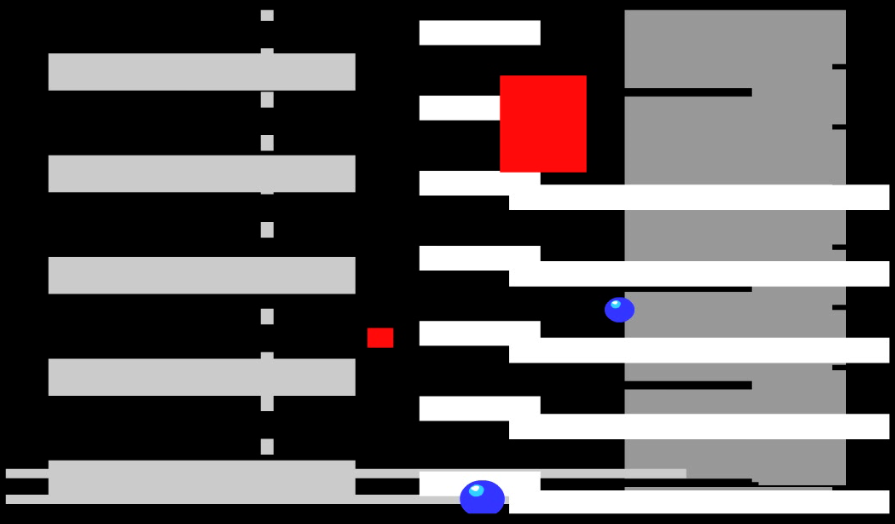
Screenshot from Ian Andrew's 2002 net.art piece: Ether-1.
I know Millennium People has been quiet recently. But the summer is coming, and a bold prospect of speculation awaits us. In the meantime, a finally-finished draft:
'The New Now' is the term used in this blog's tagline. It's really just another way of saying 'spirit of the times' or 'zeitgeist' – which were not used for these reasons: the former puts one in mind of la belle epoque, and the latter smells a bit too much like Nazis and 9/11 conspiracies. The core business of this blog is the attempt to describe, if only in a lateral or fragmentary sense, the conditions that make life in the second decade of the third millennium the swell trip that it is. It pursues several fields: global and local economic trends; our changing relationship to technology (in particular the Internet); the city (as a psychogeographical, historical and political arena) – all primarily through the lens of architecture and the built environment. Except of course where that lens fails to describe anything of relevance, which is more frequently than you might think.
"Net art is seen as an archaeology of the future, drawing on the past (especially of modernism) and producing a complex interaction of unrealized past potential and Utopian futures...""Hype around Net-based art began in the early 1990s, before the Internet had become a commodity. It developed in skeptical parallel to the rise and decline of the new economy. In 1997, documenta X featured Net art. Around the same time, major museums in the US started online art commissions or virtual showcases. The first (and last) retrospective exhibition, “netconditon,” was held in 1999. Several books published in the first years of the new millennium give overviews of the practice and theory of this art. But since then, this particular chapter of art history appears to have closed. The final indication that Net-based art was not to become another genre in the contemporary art canon was perhaps the discontinuance of the “Net vision” category in the Prix Ars Electronica 2007."Julian Stallabrass
So begins Net Pioneers 1.0, a book about contextualising early Internet art. I'm fascinated by Net Art – which is produced specifically for the medium of the Web – such that remains, like Blue Hyacinth or Seattle Drift. And while this book dates the death of Net Art to 1999, I think it is clear that art that can only be experienced through the Internet is flourishing. We are using information today in such remarkable ways, here are just three of my favourite examples of what I would call Post-Net Art (Po-NeAr?):
1. Solar Beat: an ambient music artwork that composes a score by assigning each planet a note and then having that note sound when the planet passes a datum. Art thanks to flash (oh what will happen when Flash finally dies?)

2.Moonbell: developed by the Japanese space agency JAXA this is a violent piano piece generated by the scans returned from Selene (one of Japan's orbiters that recently crashed into the moon). You are hearing a translation of the moon's surface into music.

3.Three Frames: surely the Internet's greatest .gif (sic) is the addition of time to mediums that were otherwise atemporal. Three Frames is not the only, but one of the best, examples of a blog dedicated to expressing minute slices of time in otherwise still images.

Sunday, 18 April 2010
prometheus unbound
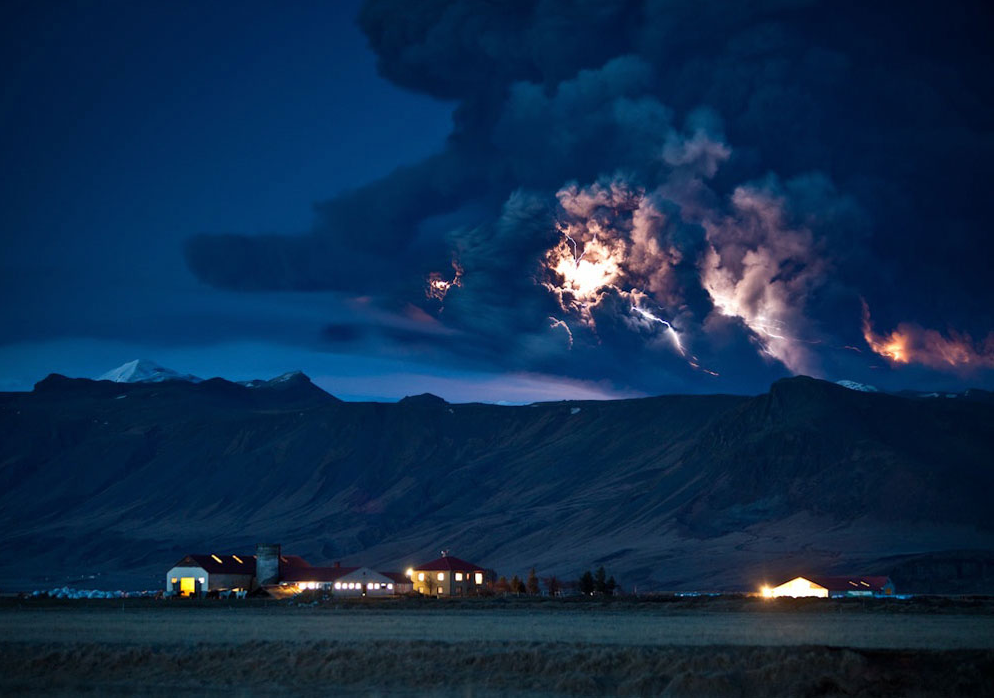
Ragnar Th. Sigurdsson in Iceland (via) - compare with my own shot (from last December)
Above me the full glory of the Northern Lights was spread across the night sky, a magnificent slow-moving dance of green haze. “I think this is a life-changing phenomenon,” I said. “It’s the tipping point in my understanding. When I moved from Australia to Europe I had to accustom myself to a completely unfamiliar sky, strange new patterns of celestial and solar arrangements, but it is only now, now! Here! That I really comprehend the full significance of what it means to stand on the surface of a spherical body moving through space!” There was an uncomfortable pause, then Borja looked up from adjusting his tripod “Man, it just looks like a slow Mac screensaver.”
Friday, 16 April 2010
carbon

Via information is beautiful.
In case you missed Millennium People's trip to Iceland last December and you want the inside story on the nation:
- Iceland #1: images of this beautiful and violent landscape
- Iceland #2: power (geothermal and
- Iceland #3: growth (agriculture under sodium lamps)
- Iceland #4: fishing (trip to the arctic circle)

Thursday, 15 April 2010
fistful of links
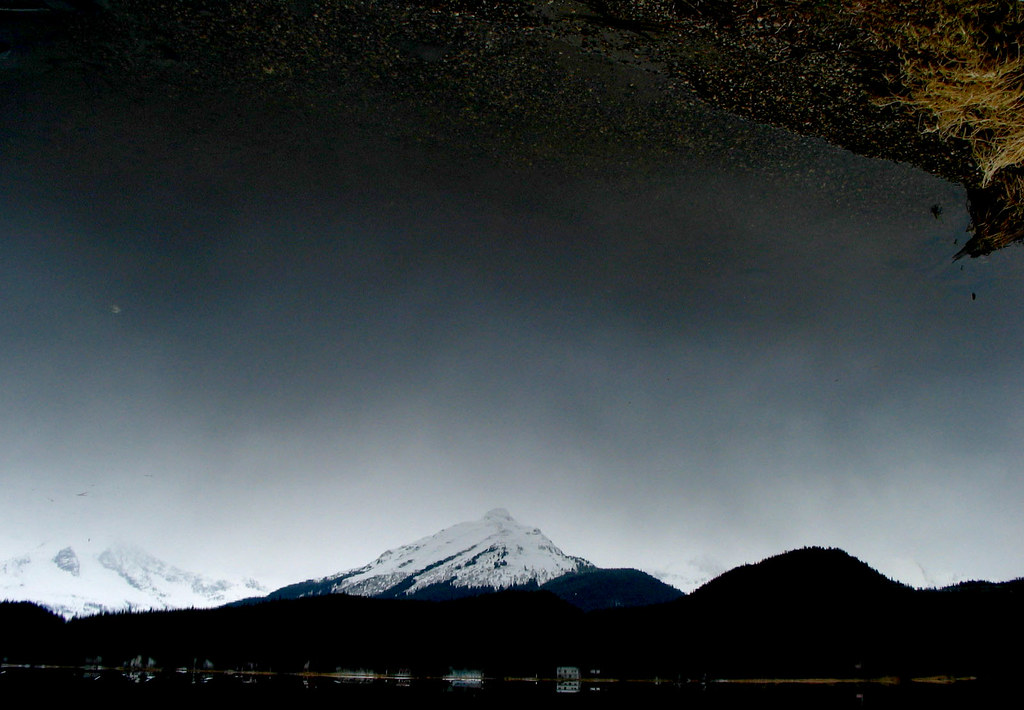
Lake Reflection by C.D. Sessums
Millennium People, I'm talking to you. This is how we make it happen: some news.
Several months ago I wrote about Iceland (saga style) after a trip there. At the national soil institute I remember staring at a massive volcano on the horizon and asking if it was dormant. "Far from it" the friendly scientist had replied "its long overdue for a really impressive explosion!"
That has happened.
Signs of the times: You can now direct an ad campaign from your desktop with Google TV ads – makes sense really. TV killed the radio, and now TV itself is being killed by the Internet. But does Google have too many moving parts? Cuba starts down the slippery slope to capitalism... Pulitzer won by online journalism - final proof (no pun) that print is no longer relevant in a digital world. Quite sad really. Yes indeed, the future is coming at us thick and fast (that's what she said); related, something that's done the rounds several times, from waaay back in 1995, we discover why the Internet will fail.

"Polar Night", by Gronsky.
Signs you're behind the times: 3 years ago some friends in Sydney asked me if I wanted to come to Earth Hour. I said no, it would never take off.The Vatican tries to justify linking paedophilia with homosexuality. Idiots. That's like saying a beard is the same thing as a scarf. Beard scarf. Catholic related, three-person IVF: its like there's a party in my egg and everyone's invited. Parent related, sob story / what constitutes a mother?

source unknown
Lightning makes mushrooms grow, apparently. Also the case in East London. Unrelated, what's going on inside your body? Eventual Ghost tells rock stars to pull their goddamn heads in. Related, inside the biggest fact-checking conference in the world; (Where else but Germany?); Its lonely in the modern world: Unhappy Hipsters. Very similar, but serious: ArchNow (a new one of those daily architecture sites); Street View time-lapse: an inevitable project; Project Daedalus (sci-fi art, kind of); Kodak Moments: image library of the last several decades (in colour). Related, Nevada Test Site Oral History; Early digital art; cheating is hurting China's reputation; Amazing images of old New York; also NY: Easter shootings in Times Square.
Finally, in the words of a great man: "let's add a layer of awesomeness!"
PIXELS by PATRICK JEAN.
Uploaded by onemoreprod. - Watch original web videos.
Saturday, 27 March 2010
informal hiatus
One of Armstrong + Millers' RAF pilot sketches. See also for real, yo.
Yeah, I took a three-week hiatus and I didn’t tell you. What are you, like, my mum or something? I don’t owe you anything. Now, back to the high-quality free content you’ve come to respect & expect:
The next three weeks are going to be mostly London oriented, with a few techie/future pieces thrown into the mix – I’m going to be talking to an architect and her partner about building communities on the Thames; telling you what’s on and what's what in town; describing what its like to walk the buried river Fleet; exploring some of the City’s hidden gems and forgotten spaces… I’ll be speculating about some emerging trends in the online world and I’m also expecting a state of the nation address from Eleanor Dodman – Millennium People’s new political editor. Yeah, look at us, a political editor, like we’re the fucking BBC or some shit.
As though this isn’t enough, I’ll be cramming in several juicy fistfuls, starting next Tuesday. Word on the street is that a brand new Millennium People is in beta (MP2.0) – should be fully up and running by summer. Part of that is recruiting regular contributors, if you'd like to tell us what you’re up to, or submit a guest post then drop a line to info@millenniumpeople.co.uk we’d love to hear from you.
Word.
Thursday, 25 February 2010
shooting the messenger

Lea Towers proposal, Stratford: Richard Rogers. Via SkyscraperCity
This short post owes much to a class discussion had this morning with Mark Cousins...
There is a temptation, when gazing up at the monstrosities of contemporary "post-architecture" (in the words of Sinclair), to let blame fall at the feet of the architect. Starting in earnest from perhaps the post-war period onwards, architects have been branded as cack-handed dreamers – belonging to a hopeless profession that is neither pragmatic nor artistic yet claims to be both. Their overpriced megalomanic schemes, fundamentally flawed at even the level of basic services and waterproofing, inflict upon every generation new social problems at ever-increasing scales. And yet it is rarely remarked that it is not architects that choose their site, their scale or their budgets.
Architects, and what is called architecture, is largely defined by the fulcrum of urban-planning and capitalist development. Neither of these forces is any less naive than the architect. Architecture's rise as a saleable commodity can be attributed, at least in part, to the transformation of the patron into the client. The patron, unlike the client, has no fiscal objectives in commissioning a project. In saying this I am perhaps extending my thoughts on Specular Architecture, which is both specular in a visual and iconic sense as well as being founded on financial speculation. Read: Zaha.
The scale of architecture responds to the scale of capital. And since a modern market economy demands constant growth, the scale can only increase. Larger and larger sites, larger and larger sums, larger and larger profits. I'm no apologist, but I think it is quite clear that architects, like any service profession, will rise to the expectations of whoever is footing the bill and giving the orders.
Tuesday, 16 February 2010
fistful of links (20th)

California on fire, via Flickr.
A soft roll of links into the gym mat that is our lives: some news.
That's how Fistful started, 20 editions ago (August 09), and it has become over time the bread and butter of MP – weekly hits are never so strong as on a Tuesday... There's a set format to the F-O-L in case you hadn't noticed: cool image: whack phrase: some news: some links: and finally, a badass video. Here are some leaders from the last 20 fistfuls:
A nice cup of tea and a sit down: some news; The locus of links that leads straight to our hearts: some news; Slicing it up and dishing it out – the 'net, just like yo'mama used to make: some news; The loose links in the ghetto gold that keeps us real: some news; An iron fistful of the weekist links: some news. And so on and so forth... Although sadly to say I've long since abandoned the time-consuming witty banter of earlier Fistfuls and now simply list those links: some news.
Word of the day with Wordsmith; need shit shipped to space privately? Visitors to the Burj Dubai stuck at 124th floor... Ballardian-inspired nightmare? The problems of long-term digital data storage; the beautiful cave photography of Christopher Colville via But Does It Float?

Did Alexander the Great fight with yeti? Or was it more likely to be the Neanderthals of central Asia? If you like jogging and phallic structures this is for you. 70's graphic design of Jeremy Pettis; photo-comic web-phenomenon Something Softer; a powerful idea; printeresting, veerry printeresting... oh, great, this guy worked out the problem with the world and thoughtfully printed it on a t-shirt for us all...
The Demotivating Times; crazy crazy photoshop; tactile maps and geographies (as mentioned by Kate Davies); Johansson is all over the net right now (almost as popular as chatroulette - but minus the male exposure) trust Colt+Rane to put up a good compilation; National Geographic photo of the day... you know, nature and shit... flights of fancy at A456; solar eclipse image; sex without a backbone; crushed planes; BLDG BLOG on the Long River (amazing photos), related: as the bubble bursts. Not related, Hamas kills mickey mouse. Not related, new images of 9/11. Turns out what conspiracy theorists called 'remote control choppers' designed to fly the two planes into the towers were... news helicopters. Surprised? Me neither. The Bird Book; photos of moth trails; Space Shuttle concepts, related, STS-131 at sunset...
Second to last (via Cessums):
And finally, a spot of Carl Sagan with my dawg Hawking on backing vocals...
Monday, 1 February 2010

Sunday, 31 January 2010
poster series (#2)

Monday, 25 January 2010
millennial escapades


If virtual space is treated as seriously as real space, then at a certain point the design of wireless fields comes into play. But how to design with an invisible medium? My aim was to influence the virtual, so I built a room within a room, a network within a network....
I went to the Apple store with a wireless broadband dongle and changed the network of the computers from Apple to myself, then set the network homepage to be my blog. The Apple red-shirts tried to work out what was going on... it took them some time, during which all Apple store customers were obliged, upon opening the safari browser, to read my blog. I was discovered and ejected.

Observant readers will notice this took place at the end of last year, during the hiatus, before MP got its makeover.
Sunday, 24 January 2010
poster series
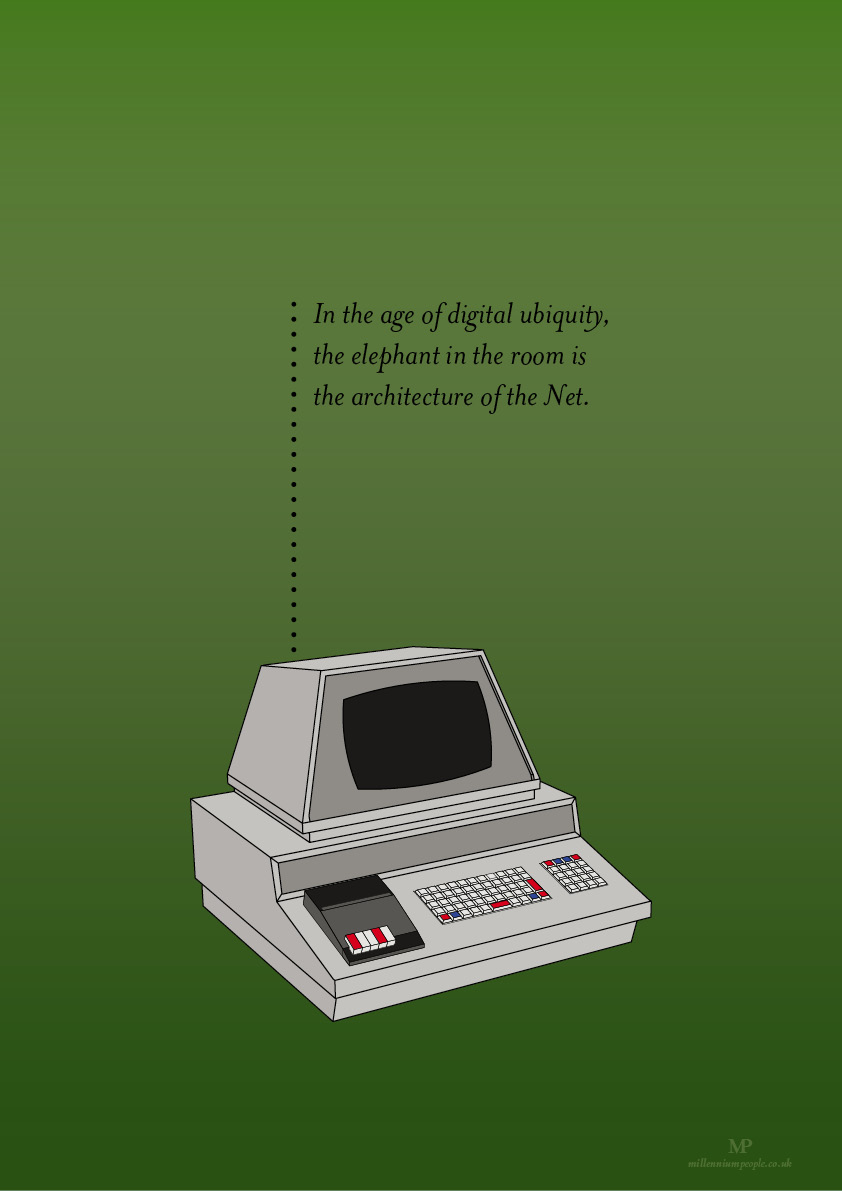
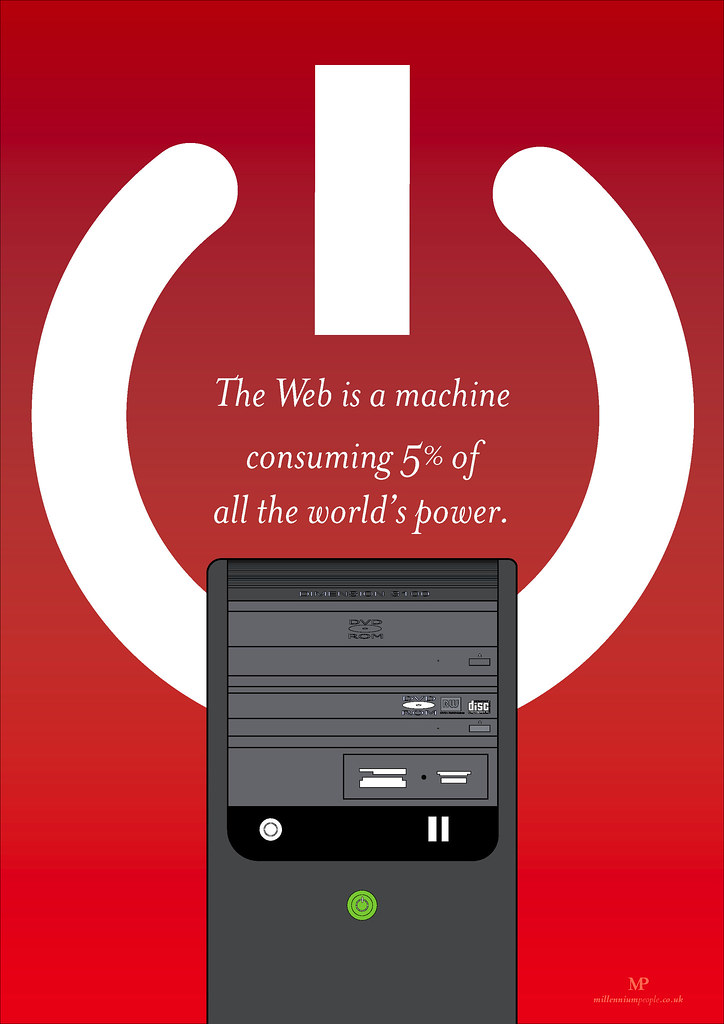
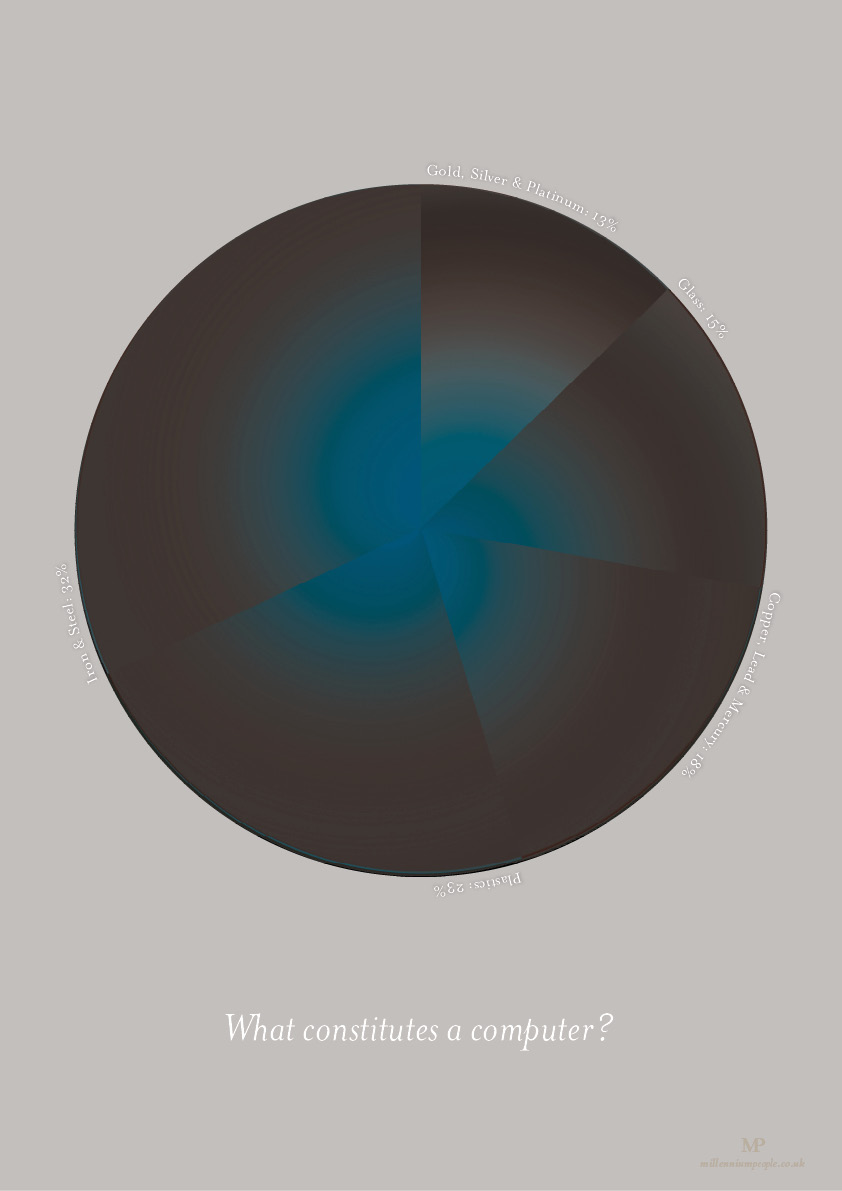
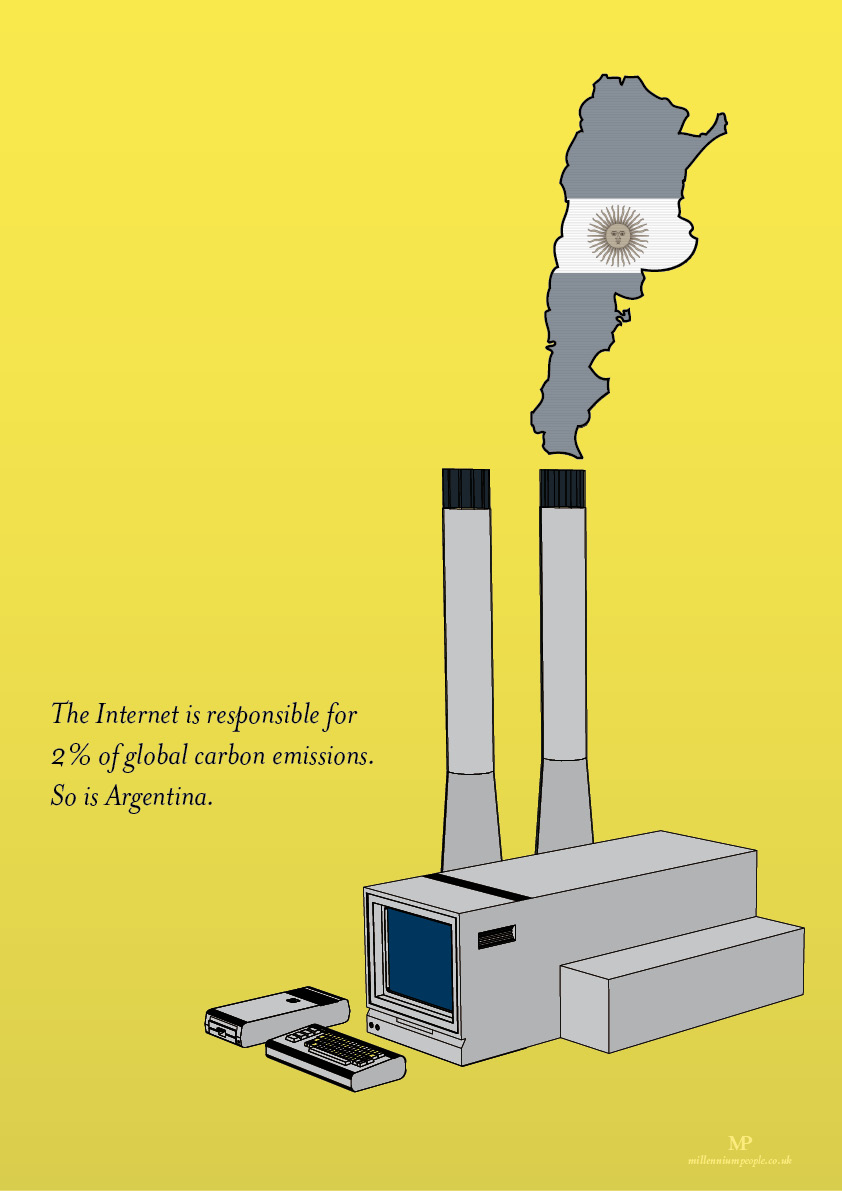
A new Millennium People poster series aiming to bring to light some interesting facts about the Internet, question our relationship to it and the portals we use to view it. Viewable on Flickr.

Friday, 22 January 2010
new millennium

The London Eye, modified from this image, and the cover of Ballard's novel 'Millennium People'.
Millennium People has moved – our new url is:
www.millenniumpeople.co.uk
Although we are no longer at www.millenniumppl.blogspot.com all traffic will automatically redirect.
Monday, 30 November 2009
hiatus

Its that time of year again.
Rather than let Millennium People drift into the region of half-written, never posted entries with the obligatory Fistful keeping the thing ticking along, MP is going on holiday – to the Arctic of all places. Next post no later than Christmas Day... with a re-launch and re-vamp for the New Year.
Take a load off, Sally. Take a load for free. And happy holidays...
Friday, 13 November 2009
where in the world / scatterbrain

If the future dialectic is the real/digital (I've heard your comments, just run with it a bit) then a poignant question might be "what of the real is already in the digital (read: Second Life, MMORPGs) and what of the digital is already in the real (read: where on the earth actually is the internet)?"
Also, I toyed with putting this up on Inter 7 (I've just put up some images of visualising wireless fields), but decided in the end it was MP worthy. It is a photo-cartoon series I've been doing about the future of the Internet, drawing the comparison between the process by which houses with monofunctional rooms (dining room, bedroom, bathroom, etc) became open plan (where the open plan is in fact other than the sum of its composite functions) and the changing nature of the Internet from a collection of monofunctional sites (facebook, wikipedia, twitter, etc) into the open plan internet (read Google Wave, and any other of those things).

Tuesday, 3 November 2009
digital dialectic

It was eerily silent at Oxford Circus last night. It had been on Sunday night too. I waited in front of the Tube exit for my father while a constant stream of empty buses rolled past, flicking up wakes in the gutters. The pavements were deserted. Then I suddenly had the irrational sensation that London was concealing itself in preparation for some imminent event and only I remained unwarned.
+++
Fukuyama famously announced the Death of History a couple of years after my birth (I don't believe the two were connected). The Death of History? The end of all history? His basis for this statement was a worldview he had extrapolated from Hegelian thinking. Hegel basically saw the spirit of any epoch (zeitgeist) as being defined by the struggle between two principal opposing entities. The neutralisation of this great struggle signals the end of the age.
The first epoch is supposedly the human struggle for mutual acknowledgement; to be recognised and recognisable to ourselves and by each other. Perhaps less opaquely, the late 19th century might be seen as the struggle between worker and master - the resolution of which signalled the end of the Industrial Revolution. The mid to late 20th century might be seen as the struggle between Communism and Capitalism.
Fukuyama's argument is that when the USSR packed up it ended the Communist/Capitalist struggle, allowing for global free-market Capitalism. The idea of the opposing entities is that they are fundamental. Capitalism is a fundamental organisation of society, as is Communism. The vacuum of the struggle, the absence of a dialectic, apparently signals the end of all history, since no major struggle replaced it.
Fukuyama's basic problem was that he was considering the 'spirit of the times' from a strictly economic standpoint. I find his dramatism about the end of history pretty absurd. Although it is true that the collapse of the USSR did signal the end of the Communism/Capitalism struggle – and Capitalism, having no opposition to keep it in check, ran out of control. The '07 crash (which we are apparently climbing out of) signalled the actual end of this mighty struggle. Which is part of my argument for why we are only now at the beginning of a new decade, new century and a new millennium, people.
To define the new age, to find the spirit of the times, in Hegelian terms is a lot easier than it sounds. It only requires the defining of the two opposing entities. Some people would say that the principal struggle of our times is technology versus nature. I'm not going to get into it too much (perhaps in another post) but this is a false division. If you look at the root of technology - tekne - it means simply 'to assemble'. Technology is an assemblage. Nature, however, is also an assemblage. That is, nature is technological. When we talk about nature and technology as opposites we are really talking about the differences in the manner of assembly. Nature assembles itself, while human assembly is always mediated. Our technology has to be assembled by our own hands.
The nature versus technology struggle can be excluded. For me, the strongest alternative is the struggle between the real and the digital. This is for several reasons - firstly, it would seem to be a logical historical progression: we have moved from the manual revolution (industrial) to the digital revolution. But a digital revolution cannot be without purpose, it has to have something to revolt against. And that subject is the real.
More to come on the subject...
Wednesday, 21 October 2009
the wake of the wealth of nations
 After Adam Smith by Shannon C. Stimson and Murray Milgate (of Palgrave’s fame) is a recent publication from the Princeton University Press that examines how, and in what ways, our thinking about the relationship between politics and political economy was transformed in the one-hundred years or so after the publication of Adam Smith's Wealth of Nations (1776).
And yet, for what is at its base a detailed historical analysis of the development of 19th century economic theory, the book remains remarkably current. And with everyone from Barack to Brown name-dropping Keynes it is certainly refreshing to read about the somewhat eclipsed Smith. By re-visiting the grand questions that interested Smith (for example, the relationship between the market and the state, or between individual liberty and common good), Milgate and Stimson re-assess the relevance of his thinking to our current global economic predicaments.
The premise of this (mostly architectural) blog is in fact an economic one – that the period 2001-2007 was not the beginning of a New Millennium, but the continuation of the 20th century, because it was a continuation of 20th century economic thinking. This conclusion is based on a subliminal association: I am defining an epoch not by its essential social dialectic, but by the economic principles that largely determine that dialectic.
In this respect, works like After Adam Smith become important signifiers of the emerging zeitgeist. The book will be of interest to anyone concerned with how the ideas of economics and economists have influenced (and continue to influence) politics and politicians. I wholeheartedly recommend it.

Adam Smith on the new £20 note.
Saturday, 17 October 2009
moonwards

Battleground, via Nasa

I'm out Sunday, so I'm bringing you tomorrow's post today (which is more than can be said of the actual post).
In theory, the moon belongs to no one. That is to say, it belongs to everyone. We take solace in the fact that while the Earth might be geo-politically torn by the petty disputes of its microscopically visioned peoples, there lies beyond our fragile sphere the vast reaches of deep space. It calls to us with the voice of the New World, inviting us into the tranquility of eternal emptiness, a profound vacuum of silence.
This is perhaps why the recent bombing of the moon by American satellites sits so uncomfortably in the public mind. The idea of pristine lunar landscapes being exploited by nations (India, China, Japan, Europe) and corporations is abhorrent, because we do not trust our own countries to behave responsibly. We're no longer sure who is the parent and who the child in the modern citizen-state relationship: 20th century policies of paternalism have largely dissolved into models dictated by the Market Economy.
One thing you sometimes hear from astronauts, although it is now fairly passé, is that 'from space, the earth has no borders'. This invokes for me not grandiose visions of one nation, nor one love, one hope, nor any of that other white-rasta-fake-hippy shenanigans. I am after all a realist. It makes me reflect more on why there are no boundaries on other heavenly bodies. The moon is an inaccessible, but perpetually present, celestial element that for us is unified because it is unoccupied. I've written about the problems of mapping the moon before – the subtext of this post is concerned with the conceptual difficulties of creating a socio-political map of the moon. But what will happen when it is colonised? Most people hardly know the geography of the earth, let alone the moon. But will we begin to look up at that satellite and subconsciously divide it into its political regions, as we do with images of the earth?
The final thing I wanted to say is that the difficulty of visualising the future human boundaries of the moon is tied up in the fact that we know those boundaries are arbitrary. When we view maps of Antarctica, the effect is similar. Yes, that segment belongs to Britain. But it is not a part of Britain, because it is physically unconnected to the socio-political evolution of that country. The New Millennium requires humanity to radically shift the way it conceives of boundaries, and I am not just referring to those that are socio-political. Perhaps the effect of a divided moon will have far-reaching impacts on the way we conceive of space that we cannot even begin to predict...
Thursday, 15 October 2009
sir ken adam

Sketch for Submarine Lair in the classic Bond 'The Spy Who Loved Me'.
On Tuesday night I was at the AA, just hanging around the bar, minding my own business, when I heard that Sir Ken Adam was going to give an interview downstairs. I was incredibly excited. If you're not aware of who he is, I will just say this: every James Bond set, gadget and gimmick – from machine gun headlights to volcano lairs– were his idea. As were the sets of Dr. Strangelove, much of Star Wars, Hornblower, Around the World in 80 Days, Chitty Chitty Bang Bang and he also consulted (apparently in a fairly involved manner) for 2001: a space odyssey (although he said that after Dr. Stangelove he didn't get on so well with Kubrick).
Further, he was the only German national to fight for the RAF during the Second War, and helped to provide air cover for the D-Day invasions: "Zthey said 'you juzt fly down zther, and fiare all your rockits' and I zthought 'that zounds simple' but... it vwas.... a lot more complicated than that."

Sketch for Dr. Strangelove's War Room (dir: Kubrick).
For the most part he reiterated the things I have heard him say elsewhere, which is why I won't be reiterating them here: go elsewhere. I'm just going to touch on one or two things that stood out. At one point he showed a slide of a drawing, and said "I had no idea who could have been doing a glass tower block like this one in 1928 in Berlin for my father's sports shop. And then, of course, I discovered it was a Mies. It was one of his forgotten projects. Even Moma didn't know about it." Needless to say a million architects reached for their pens. His photograph is not online, but the project is briefly described here.
He also postulated that the reason American Modernism was so strong and English Modernism so weak was because all the German exiles emigrated to the States – before the War the English had not taken a fancy to Modernism, and found it even unattractive as a style. He refered to 'Highpoint' in Highgate in particular. When he studied architecture at the Bartlett in 1936, he said, they were still teaching him to use Georgian and Edwardian styles. 1936. Shame. He wondered what would have happened if the English had embraced Modernity, instead of encouraging all the German Modernists to move further West.
The final point I'm going to write up is one he made about the Flowmaster pen. It was the first pen to have a felt nib and a transluscent replaceable bulb. Not only, he said, did it change the way he drew (up until that time only charcoal had provided him with the fluidity he desired) but it changed the way he designed. Later on he said, in reference to a modern render that had been done from one of his drawings, "I can tell, you kno, if a design hasz bin started by haand or as a computer architecture." He didn't express a preference, but I think the lesson is obvious: we are both limited, and afforded capabilities, with each new technology.
In the case of digital technology, the question must always be asked: are you designing that way because you can (that is, arbitrarily, because the technology allows for it)? Or, if given a blank piece of paper, or a charcoal stick, would you be trying to describe similar forms? What I really mean is, do you design digital architecture because you have digital means, or is the digital a design ideal in itself, unique from technology?
Roll that one over, Millennium People.


Subscribe to:
Posts (Atom)